
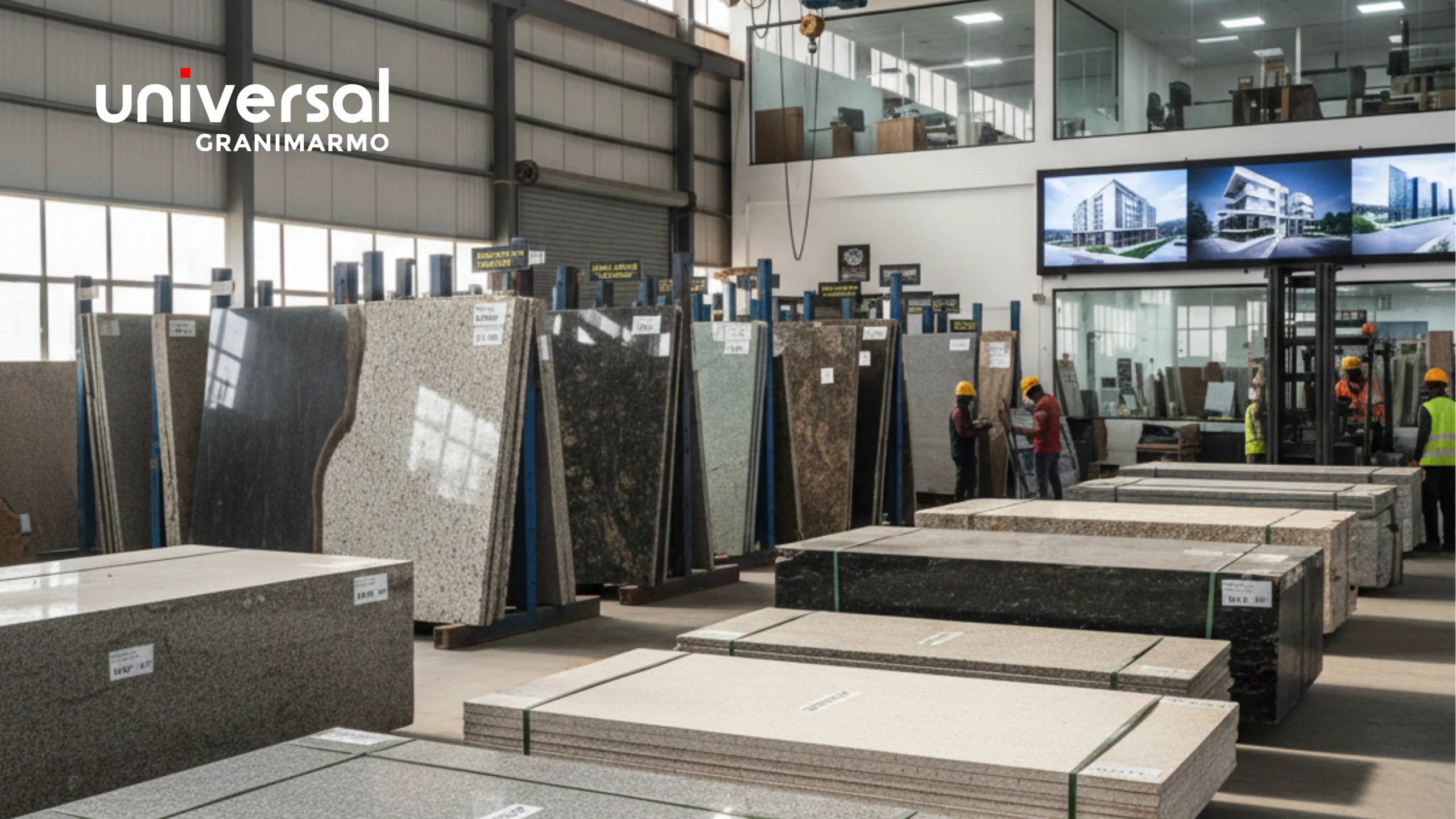
Granite is one of the most trusted and widely used natural stones in the construction and interior design industry. From luxury homes to large commercial projects, granite slabs are valued for their strength, beauty, and long lifespan. However, choosing the right granite slab size is just as important as choosing the right color or finish. Whether you are planning flooring, kitchen countertops, wall cladding, or export projects, understanding standard and custom granite slab sizes can help you save money, reduce waste, and achieve a better final result.
In this article, we will explain granite slab sizes in a simple and clear way. You will learn about standard granite slab dimensions, custom sizes, thickness options, and how to choose the right slab size for different construction needs.
Granite slab dimensions: All you need to know about
The story of a granite slab starts when it is cut from a giant block into thick sheets of 1.8, 2, or 3 cm. The cutting of various sheets from a block depends upon the block size cut on different types of stone cutting machines. A bigger size of the block is likely to produce a big number of granite slabs. Remember that the size of the granite slab hinges on the machinery used and the size of the granite. Generally, there are three common types of granite slabs:
Gangsaw slab
This sort of slab type is procured with the help of multi-blade or multi-wire gang saw machines. Such machines are capable of cutting a slab into 280-340 cm length and 160-220 cm height. You can expect 2 cm and 3 cm thickness in this category.
Big cutter slab
If you are expecting such a big slab in cutter size, a multi-blade big cutter will make things happen. This machine can help you get a slab of 130 cm height and 220-330 cm length. 1.8, 2, and 3 cm are popular thickness types in this category.
Small cutter slab
This slab type is very popular for making kitchen countertops. This sort of slab is made using a small vertical multi-blade machine. Such a machine can induce a slab of 65-100 cm height and 180-330 cm length with 1.6, 1.8, 2, and 3 cm thickness.
Granite Slab Sizes for Different Construction Needs
Choosing the right granite slab size depends on where and how it will be used.
Granite Slabs for Kitchen Countertops
For kitchens, slabs with a minimum length of 280–300 cm and a thickness of 3 cm are ideal. These sizes help cover long countertops and islands with minimal joints.
Granite Slabs for Flooring
Flooring slabs are usually cut into manageable sizes, such as 60×120 cm or larger custom panels. Thicker slabs are preferred for high-traffic areas.
Granite Slabs for Wall Cladding
Wall applications typically use thinner slabs (2 cm) with customized height and width to match the wall design.
Granite Slabs for Outdoor Use
Outdoor slabs need extra thickness and strength. Custom-cut slabs with flamed or leather finishes are commonly used for patios, pathways, and facades.
Custom and standard granite slab size
There is no dearth of slab sizes in the Indian granite market. B2B buyers buy both custom and standard-size granite slabs to satiate their business prospects. When it comes to sticking to standard sizes, buyers can expect the following sizes:
- Cutter slabs – 180x60cm
- Gangsaw slabs – 260x160cm
At a higher level, slabs are sold in standard sizes. But buyers can get their choice size as per their professional needs. They can have both granite cutter slabs and granite gangsaw slabs cut and processed as per customer specifications. Note that the largest granite slab size can be up to 340 cm. Generally, the following are some most common and popular sizes of granite slabs a buyer can expect in the Indian granite market.
Final Thoughts
Understanding standard and custom granite slab sizes is essential for making the right decision for any construction project. Standard slabs are practical, affordable, and widely used, while custom slabs offer unmatched flexibility and elegance for premium designs. Whether you are building a home, renovating a kitchen, or managing a large commercial project, choosing the right granite slab size will improve durability, aesthetics, and overall project efficiency.