
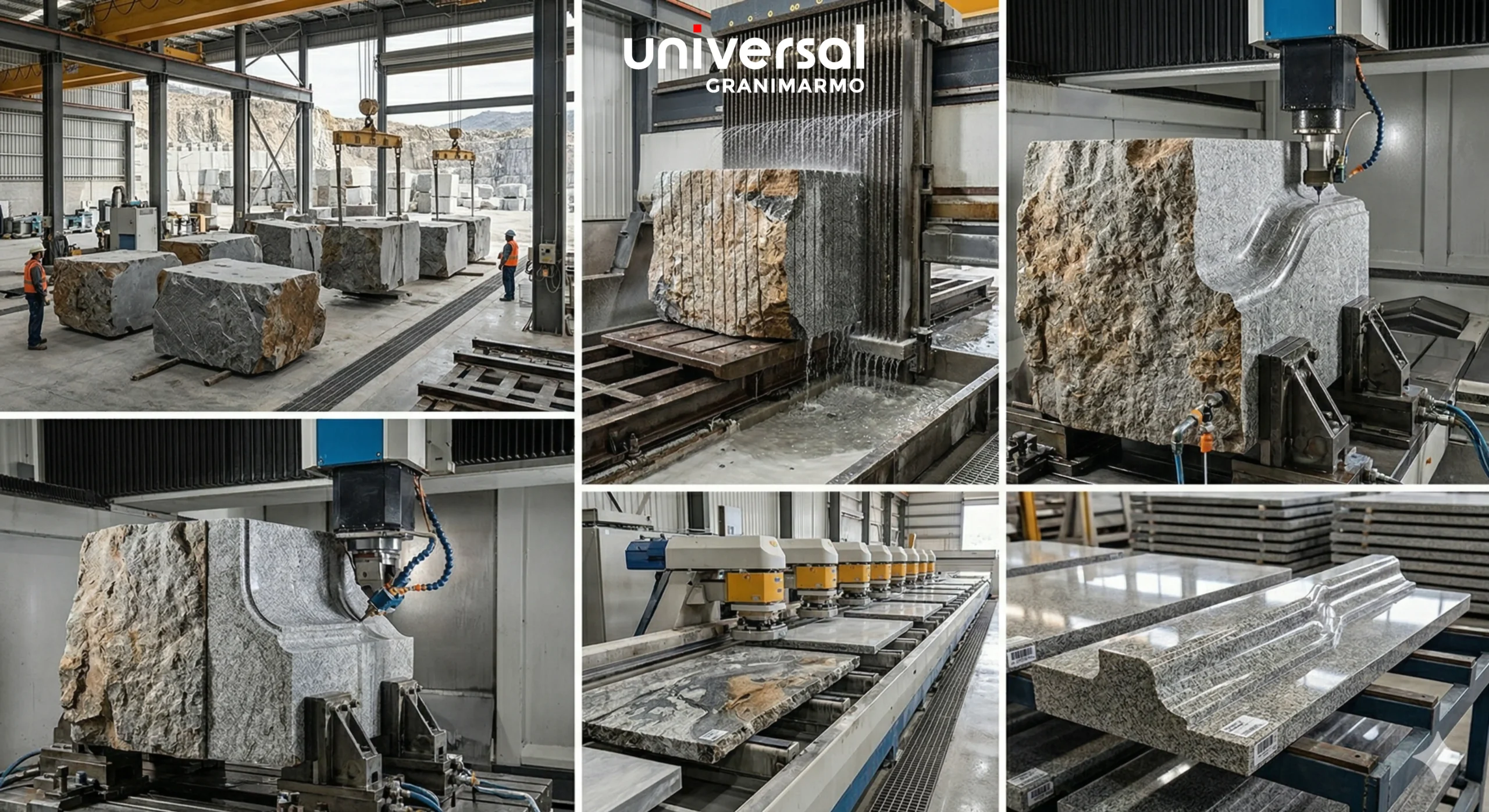
Granite blocks have been one of the most trusted and admired building materials for centuries. From ancient temples and historical monuments to modern homes and commercial buildings, granite continues to prove its value in construction. Its natural beauty, impressive strength, and long-lasting performance make it a favorite choice among architects, builders, and property owners. When people think about a material that combines durability with elegance, granite often comes to mind first.
In today’s construction world, where people want materials that are both practical and visually appealing, granite blocks stand out as a smart and timeless option. They are used in foundations, walls, flooring, facades, landscaping, and decorative structures because they can handle heavy loads, resist damage, and maintain their appearance for years. Unlike many artificial materials that lose charm over time, granite ages beautifully and often becomes even more attractive as years pass.
How Are Granite Blocks Sourced From Quarries?
Granite blocks are sourced from quarries through a process known as quarrying or extraction. This process involves several stages, each aimed at safely and efficiently retrieving the granite blocks from their natural geological formations.
Given our commitment to sustainability and safety, we exclusively source granite through non-explosive methods. Therefore, we will focus solely on discussing granite quarrying and processing using non-explosive methods.
Quarry sites are carefully chosen based on the presence of granite deposits and other geological factors. Geologists and surveyors assess the quality and quantity of granite reserves to determine the viability of the quarry site.
Heavy machinery, such as bulldozers and excavators, is utilized to clear the quarry site of vegetation, topsoil, and any other surface materials before extraction can begin. This process involves the removal of these obstructions to expose the underlying granite bedrock.
The extraction process starts by strategically drilling small anchor holes along the intended cutting path. These holes serve as attachment points to secure the diamond wire, chosen based on factors like granite hardness and block size. Once the wire is properly tensioned and looped around the block, diamond segments on it continuously abrade the granite, creating precise cuts with minimal waste. Water serves for cooling and lubrication during cutting. In essence, wire cutting provides a precise and efficient method for extracting granite blocks from quarries, minimizing environmental impact while maximizing productivity.
Outstanding Durability for Long-Term Use
Durability is one of the strongest qualities of granite blocks. Construction materials are often exposed to changing weather, moisture, dust, pollution, and physical stress. Granite performs exceptionally well in all these conditions. It is resistant to rain, sunlight, heat, and even freezing temperatures, making it suitable for both indoor and outdoor use.
Unlike some stones that absorb water quickly and become weak over time, granite has low porosity. This means it absorbs very little moisture, which helps prevent stains, cracks, and damage caused by water seepage. In exterior applications such as boundary walls, garden features, pavements, and building facades, this quality becomes highly valuable.
Granite is also resistant to fire and heat, which adds another layer of safety in construction. In kitchens, fireplaces, industrial settings, and outdoor installations, granite remains stable even when exposed to high temperatures. This makes it not only beautiful but also dependable.
Its ability to last for decades without losing its strength is what makes granite a cost-effective material. While the initial investment may be higher compared to some other options, the long life and low maintenance make it financially beneficial in the long run.
Timeless Elegance and Natural Beauty
Beyond strength and durability, granite blocks are loved for their timeless elegance. Every granite block carries unique natural patterns, mineral textures, and color variations that cannot be perfectly copied by synthetic materials. This uniqueness gives every project a rich and premium appearance.
Granite is available in a wide range of shades, including black, grey, white, red, pink, green, and brown. This variety allows architects and interior designers to match granite with different design themes, from traditional and classic spaces to sleek and modern styles.
The polished surface of granite adds luxury and sophistication, while rough-cut or flamed finishes create a more rustic and natural feel. Because of this versatility, granite blocks can be used in both decorative and structural designs.
In residential projects, granite is often used for entrance steps, feature walls, garden pathways, and compound walls to create a strong first impression. In commercial buildings, it is commonly chosen for lobbies, reception areas, exterior facades, and monument signage because it instantly enhances visual appeal.
What makes granite truly timeless is that it never goes out of style. Trends in construction may change, but natural stone always remains relevant because of its classic beauty.
Understanding the Size, Weight, and Unique Characteristics of Granite Blocks
Granite blocks suitable for slab production come in a variety of sizes and weights, depending on factors such as the quarry’s geological characteristics and the specific requirements of the production facility. However, there are some general size, weight, and quality characteristics that are typically sought after for slab production:
Size of Granite Block
Granite blocks used for slab production are typically large to maximize the yield of usable slabs. Common dimensions for granite blocks range from several feet in length, width, and height. The exact size may vary depending on the equipment and cutting techniques used by the processing facility.
Granite Block Weight:
Granite blocks can be extremely heavy due to the dense nature of the stone. Depending on their size and density, granite blocks suitable for slab production can weigh several tons. The weight of each block is an important consideration for transportation, handling, and processing.
Quality Characteristics:
Granite blocks intended for slab production must meet certain quality standards to ensure the resulting slabs are of high quality. Some key quality characteristics include:
- Uniformity: Blocks should have consistent colour, pattern, and texture throughout to produce uniform slabs.
- Structural Integrity: Blocks should be free from cracks, fractures, or other defects that could compromise the strength and durability of the slabs.
- Surface Finish: Blocks should have a relatively smooth and flat surface to facilitate cutting and processing into slabs.
- Density: Blocks should have a uniform granite density to ensure uniformity in slab thickness and appearance.
Cutting of Granite Blocks
Gangsaw
The first and foremost step of granite processing is to cut and shape the stone. In most cases, this process is done using a wire-saw cutter. During the operations of the machine, an incessant stream of water is used to release the heat produced during the process, thereby averting machine and material damage.
To prevent breaks or fractures during the cutting process, the matting is completed after the block has been formed with the wire saw. The gang-saw machine’s blades are adjusted to the rock’s hardness and the required thickness for cutting, taking into consideration any thickness loss during cutting and subsequent processing. To guarantee there is no movement throughout the cutting process, the granite block is put into the tray and filled with cement before being allowed to dry for a day.
After that, the gang-saw machine receives the tray containing the granite block. The gutting of the block is aided by the use of a slurry, which is a combination of water, lime, and grit that also serves to absorb any heat generated during the cutting process. Every material and the cutting process requires intense monitoring and adjusting of the slurry’s viscosity.
Cutting
The granite blocks are then transported to the cutting machine once they have been formed. The blades’ width is modified in accordance with specifications. There are many different types of cutter machines, ranging from those with just one blade to those with as many as ten. The process of cutting a block proceeds more quickly the more blades there are. Nonetheless, blocks of non-standard size or thickness are processed using single-blade cutter machines.
A stream of distilled water is additionally sprayed while the material is being cut in order to soak up any heat that escapes and reduce sparks. The blocks are chopped until just a few inches remain, at which point a group of stone experts cuts and removes each slab from the block individually. Following a thorough inspection for any flaws, these slabs are given numbers for inventory monitoring and transferred for further processing.
A stream of distilled water is additionally sprayed while the material is being cut in order to soak up any heat that escapes and reduce sparks. The blocks are chopped until just a few inches remain, at which point a group of stone experts cuts and removes each slab from the block individually. Following a thorough inspection for any flaws, these slabs are given numbers for inventory monitoring and transferred for further processing.
Grinding
The slabs are transported for grinding after being cut and labeled. The purpose of grinding is to remove the grainy finish that results from the cutting process from granite surfaces so that they are smooth to the touch.
To produce a consistent surface polish, grinding is done in a machine equipped with many heads that are connected to diamond abrasives of various densities. To reduce the amount of heat produced by friction, water is once again utilized in this process.
Epoxy Coating
To guarantee that the stone is further cemented, epoxy resin is used to cover all of the pits and micro-fissures that are present naturally. This procedure ensures that granite maintains its inherent beauty and matures properly over time. The granite’s inherent color and pattern will be brought out and highlighted when the epoxy it is coupled with is combined with the right granite hue.
Popular sizes:
Gangsaw Block Size: 260x160x100 cm up 280x180x100 and 300x190x120 cm up 300x200x100 Cutter Block Size: 180x70x60 cm up 240x70x60
Your search for large granite stone blocks for sale or granite stone blocks for sale comes to an end when you reach our website and find relevant information on different sizes. We sell and supply raw and rough stone products in all corners of the world.
Get an instant quote on colorful granite stone blocks by filling out the form.
Conclusion
Granite blocks truly represent the perfect combination of strength, durability, and timeless elegance in construction. Their natural toughness makes them ideal for structural support, while their resistance to weather, heat, and wear ensures long-lasting performance. At the same time, their rich textures and beautiful natural colors bring unmatched sophistication to any project.
Whether used in residential homes, commercial buildings, outdoor landscapes, or public infrastructure, granite remains a symbol of quality and permanence. It is a material that not only performs well today but continues to add value for generations.
In a world where construction trends keep changing, granite blocks remain a trusted classic. Their ability to blend practical performance with natural beauty is what makes them one of the finest building materials ever used. For anyone looking to create structures that are strong, stylish, and built to last, granite blocks are truly a timeless choice.