
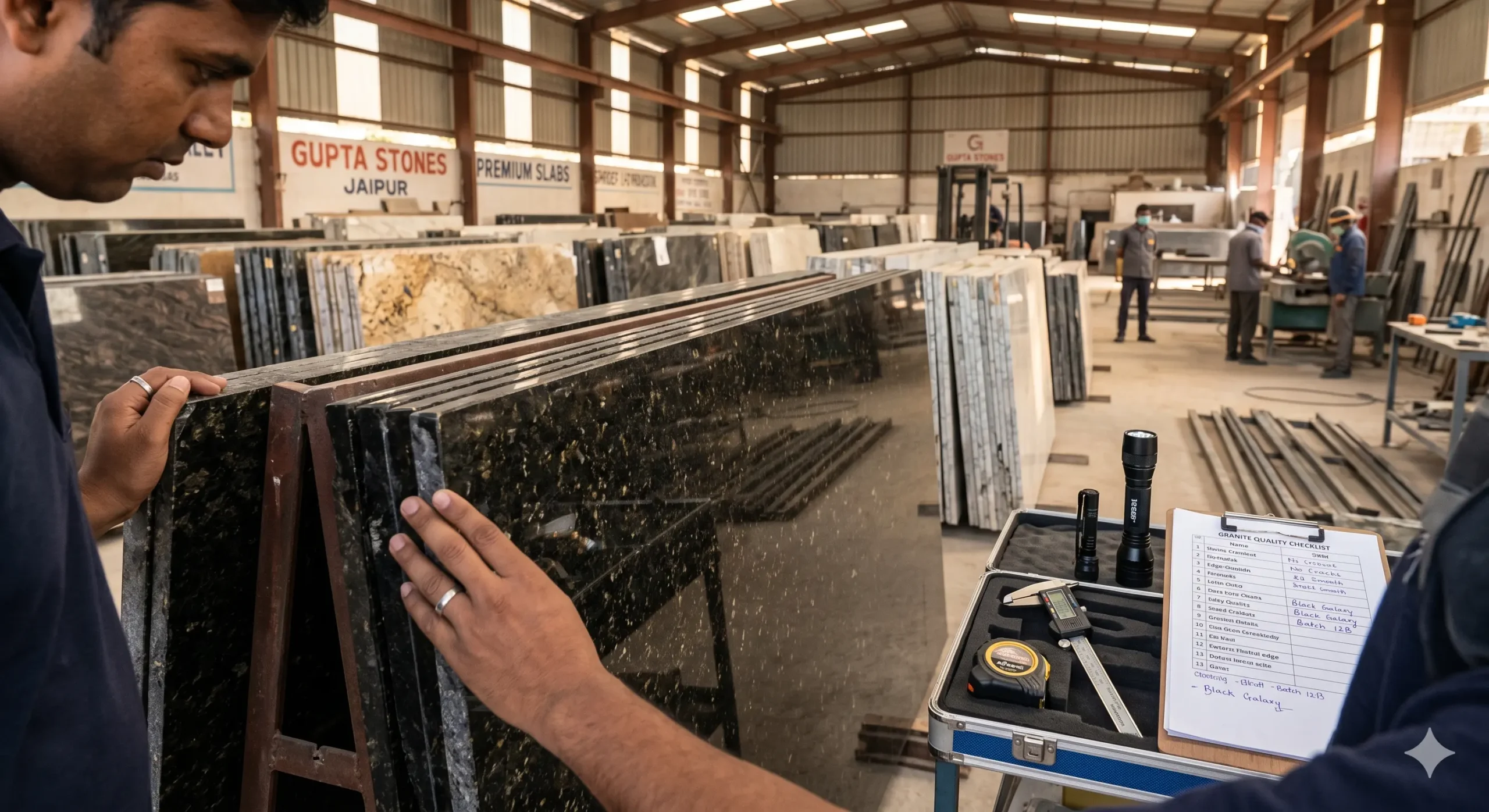
Granite Stone is one of the most popular natural stones used in homes and commercial spaces. It is known for its strength, beauty, and long-lasting performance. Whether you are planning a kitchen countertop, flooring, staircase, or wall cladding, choosing the right granite is very important. But many buyers make decisions based only on color or price, which can lead to poor results later.
This guide will help you understand how to check granite quality step by step. It is written in a simple and practical way so that anyone can use it while buying granite.
Why Granite Quality Matters
Granite Stone is a natural material formed over millions of years. Every slab is different. Good quality granite not only looks better but also lasts longer and requires less maintenance. Poor quality granite may develop cracks, lose polish, absorb stains, or even break over time.
If you are investing in granite, you want something that adds value, luxury, and durability to your space. That’s why checking quality before buying is essential.
Check the Thickness of Granite Slab
The first and most important factor is thickness. Standard granite slabs usually come in 16mm, 18mm, or 20mm thickness.
Thicker slabs are stronger and more durable. They are less likely to crack during installation or daily use. Thin slabs may be cheaper, but they are more fragile and may require additional support.
Always ask the supplier about slab thickness and make sure it is consistent across the entire piece. Uneven thickness is a sign of poor processing.
Inspect the Surface Finish
Granite is available in different finishes such as polished, honed, leathered, or flamed. The most common is a polished finish because it gives a shiny and luxurious look.
When checking quality, look closely at the surface:
- The polish should be smooth and even
- There should be no dull patches
- The shine should be consistent across the slab
Run your hand over the surface. A good quality granite will feel smooth and refined. Poor polishing indicates low-quality processing.
Look for Cracks and Fissures
Granite is a natural stone, so small lines may appear on the surface. These are called fissures and are usually natural. However, cracks are different and can weaken the stone.
Carefully inspect the slab for:
- Visible cracks
- Deep lines that go inside the stone
- Broken edges or corners
Avoid slabs with major cracks, as they can lead to breakage during installation or use.
Water Absorption Test
One of the simplest ways to check granite quality is the water absorption test.
Take a few drops of water and place them on the surface of the granite. Wait for 10 to 15 minutes.
- If the water remains on the surface, the granite is good quality
- If the water gets absorbed and leaves a dark spot, the granite is porous
Highly porous granite can absorb stains, oils, and moisture, which is not ideal for kitchens or bathrooms.
Scratch Resistance Test
Granite is a hard stone, but its quality can still vary. You can do a simple scratch test.
Use a sharp object like a key or knife and gently scratch the surface.
- If no scratch appears, the granite is strong
- If it leaves a mark easily, the quality may be low
Good granite should resist scratches and maintain its surface for years.
Edge Finishing Quality
Edges are very important, especially for countertops, stairs, and tabletops.
Check the edges for:
- Smooth finishing
- No chips or rough cuts
- Even shaping
Poor edge finishing can spoil the overall look and also make the granite unsafe to use.
Check for Resin or Fillings
Some granite slabs are treated with resin to fill natural holes and cracks. This is a common practice, but excessive resin filling can indicate lower quality stone.
Look closely at the surface:
- Too much shine may be due to heavy resin
- Filled areas may look different from natural stone
- Small holes filled with resin are acceptable, but large filled patches are not
Always ask the supplier if the granite has been treated.
Origin of Granite
Granite comes from different regions, and its quality can vary based on origin.
Some regions are known for producing high-quality granite with better durability and color consistency. Always ask the supplier about the source of the stone.
Imported granite may offer unique patterns, while local granite can be more cost-effective. Choose based on your needs and budget.
Slab Size and Cutting Quality
Large, well-cut slabs are always better because they reduce joints and give a cleaner look.
Check for:
- Straight edges
- Accurate dimensions
- No uneven cutting
Poor cutting can lead to installation problems and extra wastage.
Heat Resistance Check
Granite is naturally heat-resistant, which makes it perfect for kitchens. However, low-quality granite may not perform well under high temperatures.
While you may not test this fully before buying, you can ask the supplier about its heat resistance properties.
Good granite should handle hot utensils without damage.
Final Thoughts
Buying granite is not just about choosing a beautiful stone. It is about making a smart investment for your home or project. A high-quality granite slab will enhance the look of your space, improve durability, and reduce maintenance.
By following this granite quality checklist, you can make a confident and informed decision. Take your time, inspect carefully, and always choose quality over shortcuts.
A well-chosen granite not only adds luxury but also becomes a long-lasting part of your space.