
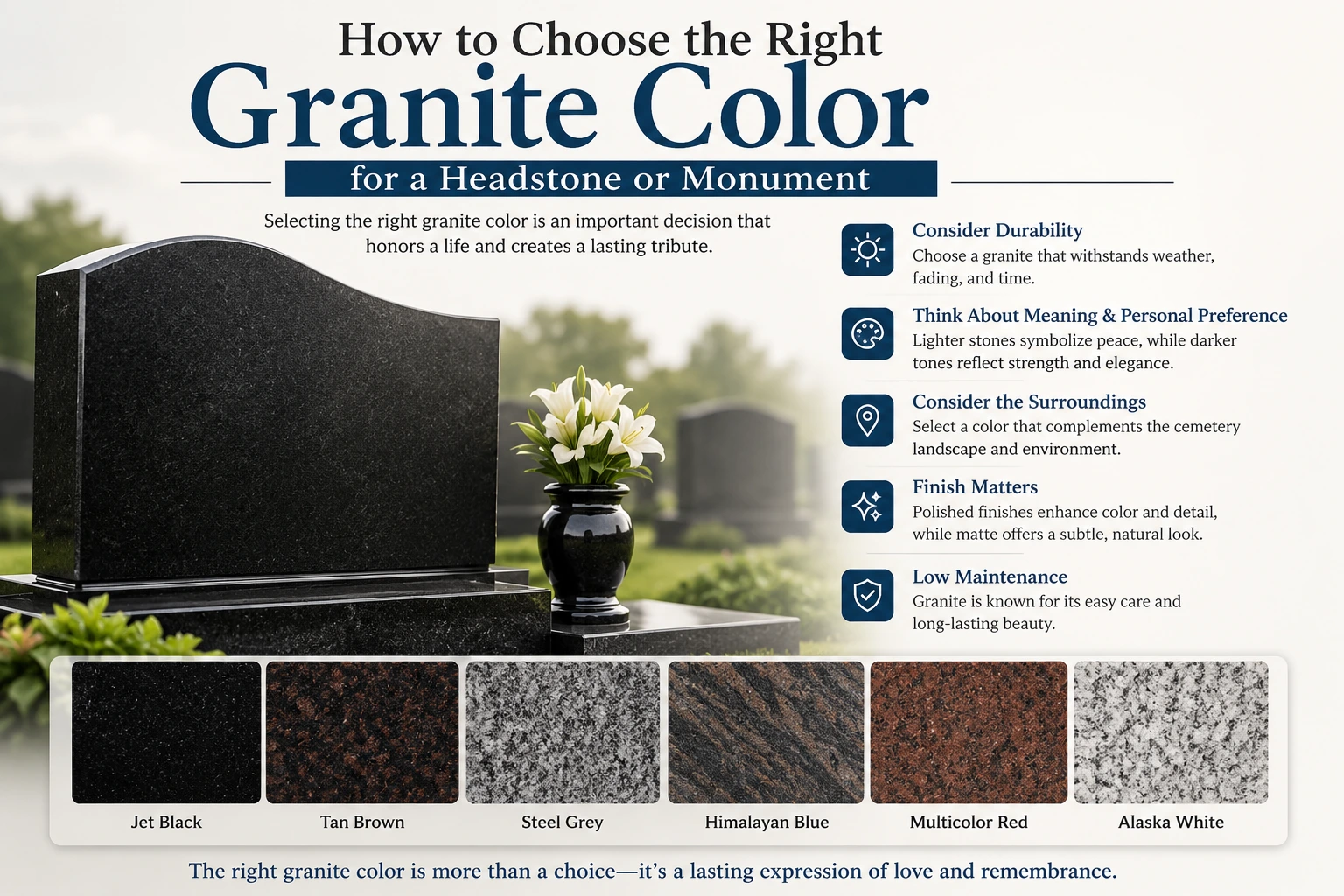
Choosing the right granite color for a headstone or monument comes down to three things: the symbolism you want the color to carry, how well it will hold up outdoors over decades, and cemetery or regulatory rules that may limit your options. Black, grey, and red granites are the most widely used worldwide because they combine deep symbolic meaning with excellent long-term durability.
Below is a complete breakdown to help you or your customers choose with confidence.
Why Granite Color Matters for a Monument
A memorial is meant to last for generations, often 100+ years, exposed to sun, rain, frost, and pollution the entire time. Unlike a kitchen countertop, a monument’s color isn’t just a style choice — it’s a decision about how the stone will read decades from now, and what it communicates about the person it honors. That’s why granite color selection for monuments is treated differently from that for interior applications.
The Most Popular Granite Colors for Headstones and Monuments
Black Granite
Black granite (such as Absolute Black or Jet Black varieties) is the single most requested color for monuments worldwide, particularly across the USA, UK, and Australia. It offers:
- A polished, mirror-like finish that makes engraved lettering and photo etchings highly legible
- Strong contrast for laser-etched portraits
- A traditional association with solemnity and remembrance
- Excellent resistance to weathering and staining
Grey Granite
Grey granite (light grey, silver grey, steel grey) is common in European and Commonwealth cemeteries. It offers a more understated, classic look and tends to blend naturally into older cemetery landscapes where uniformity is preferred or required.
Red Granite
Red and maroon granites are popular in parts of the US Midwest and in South Asian and Middle Eastern markets. Red is often chosen for its warmth and visual distinctiveness, and in some cultures carries specific symbolic meaning tied to vitality and remembrance.
Blue and Pearl Granites
Blue-grey and pearl-toned granites are a growing choice for buyers wanting something distinct from the standard black or grey options, while still remaining subtle enough for most cemetery guidelines.
Factors to Consider Before Choosing a Color
1. Cemetery and regional regulations Many cemeteries — especially older or historic ones — restrict monuments to specific colors (often only black, grey, or a defined shade) to maintain visual consistency. Always confirm allowed colors with the cemetery before finalizing an order.
2. Climate and weathering Darker granites like black and dark grey tend to show water spotting and mineral deposits more visibly over time in high-rainfall climates, though this is largely cosmetic and doesn’t affect structural durability. Lighter granites can show less visible spotting but may show lichen or moss growth more readily in damp climates.
3. Lettering and engraving visibility Polished black and dark grey granite provide the highest contrast for sandblasted lettering, gold-leaf inlay, and laser-etched photo portraits — which is why they dominate the memorial industry.
4. Cultural and personal symbolism: Color choice is often deeply personal. Some families choose a color that matches the deceased’s favorite stone, birthstone tone, or cultural tradition, rather than the most common option.
5. Finish (polished, honed, or flamed). The finish changes how a color reads. A polished black looks glossy and formal; the same black in a flamed (matte, textured) finish looks rustic and is often used for rougher-hewn or natural-edge memorial designs.
Granite Color Comparison Table
| Color | Best For | Durability | Lettering Contrast |
| Black | Portraits, formal memorials, and most cemeteries | Excellent | Excellent |
| Grey | Classic/traditional, European cemeteries | Excellent | Good |
| Red/Maroon | Distinctive markers, specific cultural preference | Excellent | Good |
| Blue/Pearl | Modern, understated alternative to black | Excellent | Moderate |
Frequently Asked Questions
What is the most popular granite color for headstones?
Black granite monuments are the most popular choice globally due to their high contrast for engraving and their traditional association with remembrance.
Does granite color affect how long a monument lasts?
No — all natural granite colors are equally durable structurally. Color affects visible weathering (like water spotting) but not the stone’s strength or lifespan, which typically exceeds 100 years regardless of color.
Can I choose any granite color for a cemetery monument?
Not always. Many cemeteries have rules limiting monuments to specific colors to maintain a uniform appearance. Always check with the cemetery before ordering.
Is darker granite harder to maintain than lighter granite?
Darker granite can show water spots and dust more visibly, while lighter granite may show moss or lichen growth more easily in humid climates. Both require only occasional cleaning.
What granite color is best for engraved photos or portraits?
Polished black granite provides the sharpest contrast and is the industry standard for laser-etched photo memorials.