
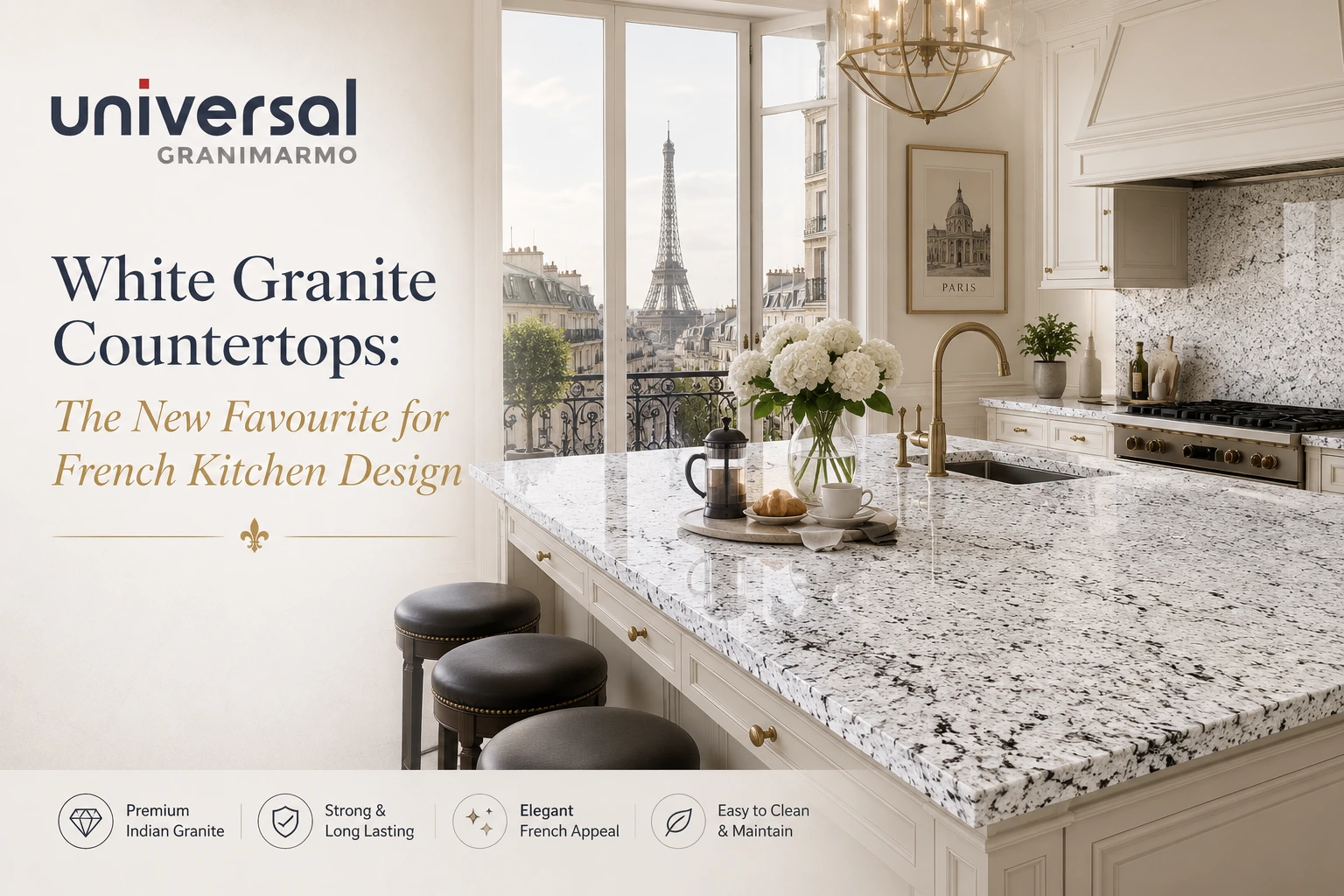
French kitchen design has always balanced elegance with restraint — clean lines, natural materials, and a quiet sense of luxury rather than anything showy. It’s exactly why white granite countertops are having a moment in kitchens from Paris apartments to Provençal farmhouses. They deliver the bright, timeless look homeowners want, without the maintenance headaches that come with marble.
Why French Homeowners Are Moving Away from Marble
Marble has long been the default choice for French kitchens and bathrooms, prized for its veining and classic appeal. But marble is soft and porous — it stains easily from wine, olive oil, citrus, and everyday cooking acids, and it scratches more readily than granite.
White granite countertops solve this problem while keeping the same light, airy aesthetic French interiors are known for:
- Comparable good looks — many white granite varieties have subtle veining or speckled patterns that echo marble’s character
- Far greater durability — granite resists scratching, heat, and staining much better than marble
- Lower maintenance — an annual reseal is usually all that’s needed, versus marble’s more frequent care requirements
What Makes a Great White Granite Countertop
Not all white granite looks the same, and French buyers are typically choosing between a few distinct looks:
- Pure, near-solid white granite — for a minimalist, Scandinavian-influenced kitchen aesthetic that’s increasingly popular in newer Parisian builds
- White granite with grey or black flecking — a versatile option that pairs well with both classic French oak cabinetry and contemporary matte-black fittings
- White granite with warm gold or beige undertones — suited to traditional country-style kitchens in regions like Provence or the Loire Valley
Explore the full white granite range to compare finishes and patterns before choosing.
Practical Reasons Granite Wins for Kitchen Countertops
Beyond looks, French kitchens see heavy daily use — this is a country that takes cooking seriously. White granite countertops handle that use well because they are:
- Heat resistant — hot pans can be set directly on the surface without damage
- Scratch resistant — knife slips and daily wear won’t dull the finish the way they can with softer stone
- Non-porous when properly sealed — resisting the red wine, coffee, and oil stains that are an unavoidable part of French kitchen life
Sourcing White Granite for a French Renovation
Whether you’re renovating a Haussmannian apartment kitchen or building a country house countertop from scratch, sourcing matters as much as the stone itself. When comparing suppliers, ask:
- Can they supply enough consistent slabs for a full run of countertops without visible colour variation between pieces?
- Do they offer both polished and honed finishes, to suit either a glossy contemporary look or a softer matte French farmhouse style?
- What lead time and delivery options do they offer into France specifically?
Universal Granimarmo processes granite across production units in Rajasthan and southern India, giving French buyers access to a wide range of white granite tones from a single, reliable granite stone supplier — alongside marble, sandstone, and slate for projects that mix materials. Learn more about the company and its export journey since 2013.
Frequently Asked Questions
Is white granite as elegant as white marble for a French kitchen?
Yes — many white granite varieties offer similar veining and brightness to marble, while being significantly more resistant to staining and scratching, which makes them a practical alternative for a busy kitchen without sacrificing the look.
Does white granite stain from wine or oil?
Properly sealed white granite is highly stain-resistant. A quality sealant applied at installation and refreshed roughly once a year keeps the surface protected from wine, oil, citrus, and other common kitchen spills.
What’s the difference between polished and honed white granite countertops?
Polished granite has a glossy, reflective finish that suits contemporary kitchens, while honed granite has a matte, softer finish often preferred in traditional or country-style French interiors. Both offer the same durability — the choice is purely aesthetic.
How thick should a granite countertop be?
Most kitchen countertops use 20mm or 30mm thick granite slabs. Thicker slabs (30mm) give a more substantial, premium edge profile, while 20mm is lighter and often used with a laminated edge to appear thicker.
Can white granite countertops be custom cut for kitchen islands or unusual layouts?
Yes. Granite slabs can be templated and cut to fit specific kitchen layouts, including islands, waterfall edges, and integrated sink cut-outs, provided the supplier works from an accurate site template.
How do I get matching granite for a large kitchen renovation?
Order all countertop pieces from the same slab batch where possible. A supplier with large-scale processing capacity, like Universal Granimarmo’s Rajasthan and southern India units, can typically match slabs for an entire kitchen from one production run.
Ready to see the options? Download the full product catalogue or request a sample to see the finish and tone in your own kitchen lighting. Browse more design guides on our blog.