
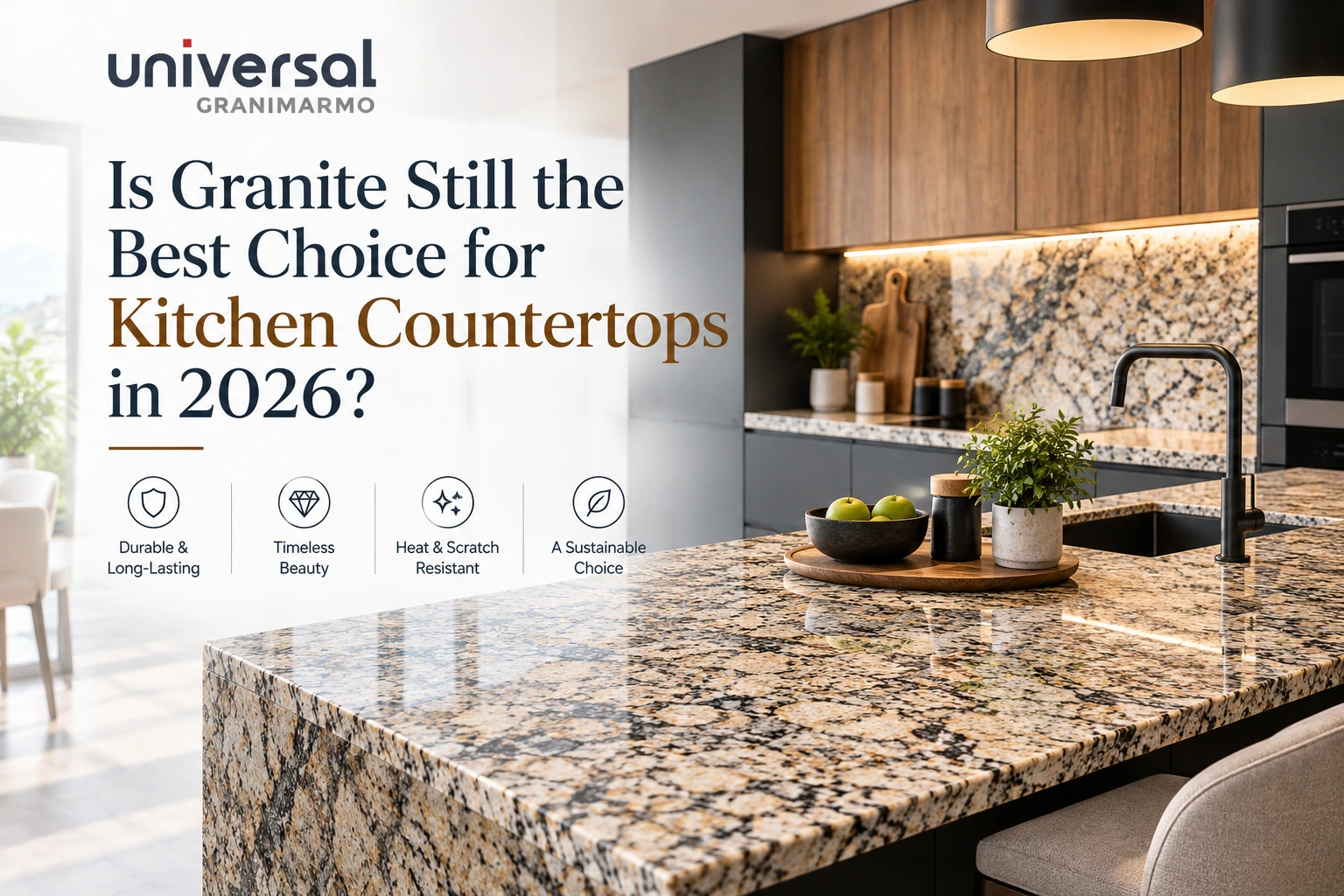
Kitchen counter top options have exploded over the last decade. Quartz, quartzite, porcelain, and even recycled materials now compete for space on showroom floors alongside granite. So it’s a fair question: with all these alternatives, does granite still hold up in 2026?
The short answer is yes — but the reasons why have shifted. Let’s break down where granite still wins, where it doesn’t, and how to decide if it’s right for your project.
Why Granite Remains a Top Contender
1. Unmatched natural beauty. No two granite slabs are identical. Each one is formed over millions of years, giving it a depth, movement, and character that manufactured materials still struggle to replicate convincingly. For homeowners and designers who want a countertop that feels genuinely one-of-a-kind, granite is hard to beat.
2. Heat and scratch resistance: Granite is one of the hardest natural stones used in countertops. It shrugs off hot pans, knife nicks, and daily kitchen abuse better than most engineered alternatives, which can scorch or dull under heavy use.
3. Long-term durability: A properly sealed granite countertop can last decades without needing replacement. For buyers thinking in terms of total cost of ownership rather than upfront price, that longevity matters.
4. Value retention: Granite continues to be a recognized selling point in real estate listings. Buyers and appraisers still associate it with quality, which can support resale value in a way that some newer materials haven’t yet proven over time.
Where Granite Faces Real Competition
Quartz has closed the design gap. Engineered quartz now offers extremely consistent patterns, a wider color range, and no need for sealing. For buyers who prioritize low maintenance and predictable uniformity over natural variation, quartz is a legitimate alternative — and in 2026, it continues to gain market share.
Porous surfaces need upkeep. Granite is porous and requires periodic sealing to resist staining, particularly from oils, wine, and acidic foods. This is a genuine drawback for buyers who want a countertop they can install and forget about.
Price varies widely by grade. Not all granite is priced the same. Lower-grade slabs can be very affordable, while rare colors and larger book-matched slabs can rival or exceed premium quartz. Buyers need to compare like-for-like grades, not just “granite” versus “quartz” as categories.
What’s Changed by 2026
A few trends are shaping how granite is being specified and sourced today:
- Larger slab formats are reducing seams in big kitchen islands, a demand driven by open-concept kitchen designs.
- Matte and leathered finishes are increasingly popular alongside traditional polished surfaces, giving granite a more contemporary look.
- Sourcing transparency matters more to buyers, who increasingly ask about quarry origin, ethical labor practices, and shipping footprint — not just color and pattern.
- Bulk and custom-size sourcing from established exporters has become easier, letting contractors and distributors secure consistent supply for larger commercial and residential projects.
So, Is Granite Still the Best Choice?
It depends on what you’re optimizing for:
| Priority | Best Fit |
|---|---|
| Natural, unique look | Granite |
| Zero maintenance | Quartz |
| Heat resistance for heavy cooking | Granite |
| Predictable, uniform pattern | Quartz |
| Long-term resale value | Granite |
| Budget-conscious, low upkeep | Quartz or mid-grade granite |
For buyers who value authenticity, durability, and a counter top that ages with character rather than looking manufactured, granite remains a strong — arguably the strongest — choice in 2026. The key is sourcing quality material from a supplier who can guarantee consistent grading, proper finishing, and reliable delivery, since the biggest complaints about granite usually trace back to poor sourcing rather than the stone itself.
Frequently Asked Questions
Is granite still popular for kitchen counter tops in 2026?
Yes. Granite remains one of the most requested materials for kitchen counter tops, especially among buyers who want a natural, unique look and strong heat resistance. Quartz has gained ground for its low maintenance, but granite hasn’t lost its core appeal.
Is granite better than quartz for kitchen counter tops?
Neither is universally “better” — it depends on priorities. Granite offers natural variation, superior heat resistance, and long-term resale appeal. Quartz offers uniform patterns and doesn’t require sealing. Buyers who cook frequently with hot pans often prefer granite; buyers who want zero maintenance often prefer quartz.
Does granite still need to be sealed every year?
Most modern granite sealants last one to three years, depending on the sealant quality and how much wear the counter top gets. High-quality sealers and denser granite varieties can extend that interval further.
Is granite more expensive than quartz in 2026?
It varies widely. Entry-level and mid-grade granite is often comparable to or cheaper than quartz. Rare colors, large book-matched slabs, and imported premium granite can cost more than standard quartz. Comparing similar quality tiers, rather than the materials as broad categories, gives a more accurate price picture.
How long does a granite counter top last?
With proper sealing and normal care, granite counter tops commonly last 20 to 30 years or longer, making them one of the more durable options among both natural and engineered surfaces.
Which granite colors are trending for kitchens in 2026?
Deep neutrals like black, gray, and brown remain popular for their versatility, while warm golds and whites with subtle veining are trending in contemporary kitchen designs. Lathered and matte finishes are also gaining traction alongside traditional polished slabs.
Is granite a good long-term investment for resale value?
Generally, yes. Granite continues to be recognized by buyers and appraisers as a premium material, which can support resale value, particularly in markets where natural stone is still associated with higher-end finishes.