
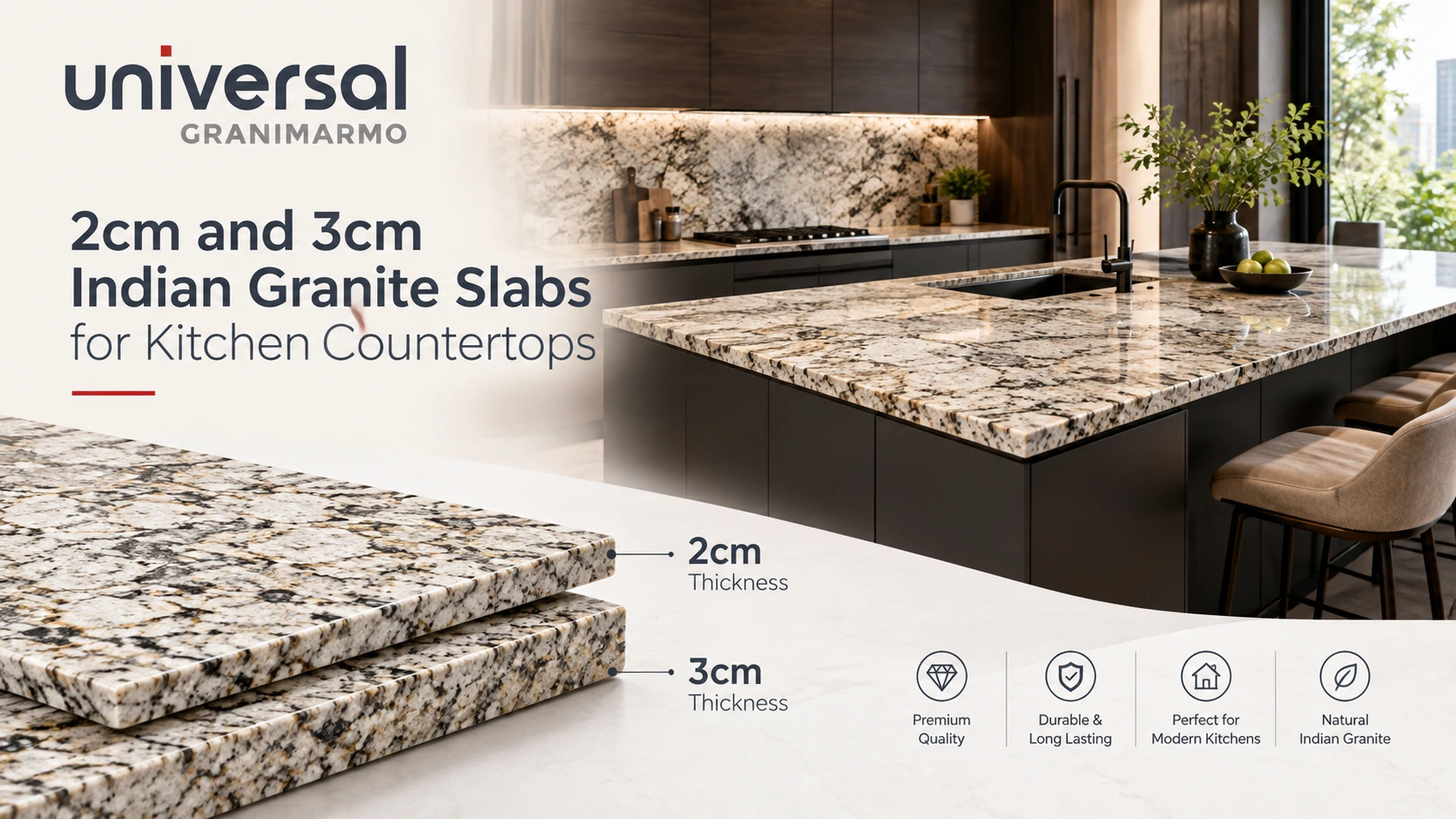
Choosing the right countertop is one of the biggest decisions when you build or renovate a kitchen. The kitchen is the busiest part of the home, and the countertop takes a lot of daily punishment from hot pans, sharp knives, spilled oil, and heavy appliances. That is why so many homeowners, builders, and designers around the world choose Indian granite slabs for kitchen countertops. India is one of the largest producers and exporters of natural granite, and its stone is known for strong quality, rich colors, and fair prices. When you start shopping, one question comes up again and again: should you choose a 2cm or a 3cm granite slab? This guide explains everything in simple words so you can pick the right slab for your kitchen with confidence.
Why Indian Granite Is a Great Choice for Kitchen Countertops
Granite is a natural igneous stone formed deep inside the earth over millions of years under heat and pressure. Because of this, it is very hard, dense, and durable. Indian granite is famous in the global market because the country has large quarries in states like Andhra Pradesh, Tamil Nadu, Karnataka, and Rajasthan, which produce a wide range of colors and patterns. Whether you like deep black, warm brown, soft white, cool grey, or bold red, there is an Indian granite that fits your taste. Every slab is unique, so your kitchen will never look exactly like anyone else’s. Indian granite also offers very good value for money. You get a premium, long-lasting surface at a much lower cost than many imported stones, which is why importers, contractors, and fabricators worldwide buy Indian granite in large quantities.
What Are 2cm and 3cm Granite Slabs?
The numbers 2cm and 3cm simply describe the thickness of the granite slab. A 2cm slab is about 20 millimeters thick, which is close to three-quarters of an inch. A 3cm slab is about 30 millimeters thick, which is close to one and a quarter inches. Both come from the same natural stone and offer the same beauty, color, and hardness. The main difference is how thick and heavy they are, and that affects how they are installed, how much they cost, and how they look on the finished countertop. Many people think one is “good” and the other is “bad,” but that is not true. Each thickness is useful in a different situation, and the right choice depends on your kitchen design, your budget, and your installation method.
2cm Indian Granite Slabs for Kitchen Countertops
A 2cm granite slab is thinner and lighter, which makes it easier to transport, handle, and install. It is very popular in places where cost matters and where the countertop will be fully supported from below. Because it uses less stone, a 2cm slab usually costs less than a 3cm slab, and shipping is cheaper too since more slabs can fit in a container. This makes it a smart choice for builders working on apartments, rental properties, and large housing projects. A 2cm slab is also great for vertical uses such as backsplashes, wall cladding, and bathroom vanity tops. However, it is important to know that a 2cm countertop should be installed over a solid plywood base or a full support layer. Without proper support, a thinner slab can be more likely to crack under heavy pressure, especially near the sink or cooktop cutouts. Fabricators often finish the front edge with a laminated or built-up edge so the countertop looks thicker and more solid. When installed properly, a 2cm granite countertop performs very well and can last for many years.
3cm Indian Granite Slabs for Kitchen Countertops
A 3cm granite slab is thicker, heavier, and stronger, which is why it is often called the premium choice for kitchen countertops. Its extra thickness gives it better strength on its own, so it can usually be installed without a full plywood base, and it handles overhangs like breakfast bars and kitchen islands much better. A 3cm slab also gives a bold, solid look with a clean, thick edge, and it allows many decorative edge profiles such as bullnose, ogee, beveled, and half-bullnose without extra lamination. Homeowners who want a high-end, luxury feel usually choose this thickness. It is also more resistant to chipping and cracking during daily use, which gives extra peace of mind in a busy family kitchen. The main downsides are the higher price and heavier weight, which can raise transport and installation costs. Even so, many people feel the extra investment is worth it for the strength and the rich look.
2cm vs 3cm Granite: Which One Should You Choose?
The best way to decide is to think about your budget, your kitchen layout, and your style. If you are working with a limited budget or you are building many units at once, 2cm granite is a practical and money-saving option, as long as it has strong support underneath. If you want a stronger, more luxurious countertop with a thick edge, or you plan to have a large island or long overhang, 3cm granite is usually the better choice. In terms of beauty, both thicknesses look equally stunning because the color and pattern come from the same natural stone. In terms of weight, 3cm is about 50 percent heavier, so your cabinets must be strong enough to carry it. In terms of edge design, 3cm gives you more freedom, while 2cm often needs a built-up edge to get the same thick look. If you are not sure, talk to your fabricator or supplier. They can look at your cabinets, your design, and your budget and tell you which thickness will work best.
Popular Indian Granite Colors for Kitchen Countertops
India offers a huge collection of granite colors, and both 2cm and 3cm slabs are available in most of them. Black Galaxy is one of the most loved choices, with a deep black base and shiny golden sparkles that look beautiful under kitchen lights. Absolute Black is a plain, smooth black granite that suits modern and minimalist kitchens. Tan Brown is a classic dark brown granite with black and reddish tones, and it is a top seller all over the world because it hides stains well and fits both traditional and modern homes. Kashmir White is a light, elegant granite with soft grey and burgundy specks that makes small kitchens feel bright and open. Steel Grey offers a calm, cool look that matches white or wooden cabinets. Imperial Red and Multicolor Red give a warm and bold statement, while Star Galaxy and Blue Pearl give a special sparkle that makes the kitchen feel rich. When choosing a color, think about your cabinet color, your wall paint, your flooring, and how much natural light your kitchen gets. Darker granites hide marks and crumbs better, while lighter granites make the room feel larger.
Benefits of Using Indian Granite for Kitchen Countertops
Granite has many benefits that make it one of the most trusted materials for kitchens. First, it is extremely durable and can last for decades if it is cared for properly. Second, it is heat resistant, so you can place moderately hot pots and pans on it without worry, although using a trivet is always a good habit. Third, it resists scratches very well, so daily cutting, sliding of dishes, and cleaning will not easily damage the surface. Fourth, every slab is natural and unique, which adds real character and value to your home. Fifth, it is easy to clean with just mild soap and water. Sixth, a good granite countertop increases the resale value of your house because buyers love the look and quality of natural stone. Finally, Indian granite in particular offers a great balance of price and quality, so you get a premium finish without paying too much.
How to Take Care of Your Granite Countertop
Granite is strong, but a little care will keep it looking new for many years. Clean the surface daily with warm water and a soft cloth, and use a mild dish soap or a stone-safe cleaner when needed. Avoid harsh chemicals, bleach, vinegar, and lemon-based cleaners, since acidic products can slowly dull the shine over time. Wipe up spills like oil, wine, juice, and coffee quickly so they do not sit on the surface. Most granite should be sealed when it is first installed and then resealed about once a year, which helps stop liquids from soaking into the stone. A simple test is to drop a little water on the surface: if it soaks in and makes a dark spot, it is time to reseal. Also, avoid cutting directly on the granite, because it can dull your knives, and use a cutting board instead. Do not sit or stand on the overhang of the countertop, especially with a 2cm slab. With these simple habits, your granite countertop will stay beautiful for a very long time.
Things to Check Before You Buy Granite Slabs
Before you buy, always check the quality of the slab. Look for even thickness, smooth polishing, and a consistent color across the whole slab. Check for cracks, deep pits, or weak lines, and make sure any natural veins are not too fragile. If possible, view the full slab in person or ask for clear photos and videos, because color can look different in a small sample. Ask the supplier about the slab size, the finish (polished, honed, leather, or flamed), and whether the batch is uniform in color, especially if you need many slabs for one project. It is also smart to work with a trusted Indian granite exporter or supplier who offers good packaging, on-time delivery, and quality checks before shipping. Finally, choose an experienced fabricator, because even the best granite will not perform well if it is cut or installed badly.
Conclusion
Both 2cm and 3cm Indian granite slabs are excellent options for kitchen countertops, and neither one is wrong. Choose 2cm if you want to save money, need lighter material, and can provide full support underneath. Choose 3cm if you want extra strength, a thick luxury look, and the freedom to design large islands and overhangs. With strong quality, beautiful colors, and fair prices, Indian granite gives you a countertop that stays attractive and useful for many years. Take your time, compare colors and thickness, work with a reliable supplier, and your kitchen will become a place you are proud of every day.
Frequently Asked Questions (FAQs)
1. What is the difference between 2cm and 3cm granite slabs?
The difference is thickness. A 2cm slab is about 20 mm thick, and a 3cm slab is about 30 mm thick. The 3cm slab is heavier and stronger, while the 2cm slab is lighter and cheaper.
2. Which is better for kitchen countertops, 2cm or 3cm granite?
It depends on your needs. 3cm granite is stronger and looks more premium, so it is great for islands and overhangs. 2cm granite is a good budget choice when it has proper support underneath.
3. Is 2cm granite strong enough for a kitchen countertop?
Yes, it is strong enough when installed correctly over a full plywood base or solid support. It should not be used with long unsupported overhangs.
4. Is 3cm granite more expensive than 2cm granite?
Yes, usually. It uses more stone and weighs more, so the material, shipping, and installation costs are higher.
5. Does 3cm granite need plywood support?
Most of the time it does not, because it is strong enough on its own. It only needs solid, level cabinets to rest on.
6. Which Indian granite colors are best for kitchens?
Popular choices include Black Galaxy, Absolute Black, Tan Brown, Kashmir White, Steel Grey, and Imperial Red. The best color depends on your cabinets, walls, and lighting.
7. Is Indian granite good quality?
Yes. Indian granite is famous worldwide for its durability, color range, and value for money, and it is exported to many countries.
8. Do granite countertops need sealing?
Yes, most granite needs to be sealed after installation and then resealed about once a year to protect it from stains.
9. Can I put hot pans directly on a granite countertop?
Granite handles heat well, but it is safer to use a trivet or hot pad, because sudden temperature changes can sometimes stress the stone.
10. How long does a granite countertop last?
With proper care, a granite countertop can last 30 years or more, and often the lifetime of the home.
11. How do I clean granite countertops?
Use warm water, a soft cloth, and mild dish soap. Avoid bleach, vinegar, and harsh chemical cleaners.
12. Can 2cm granite be used for backsplashes and bathroom vanities?
Yes. 2cm granite is a very popular choice for backsplashes, wall cladding, and bathroom vanity tops.
13. What finishes are available for granite slabs?
The most common finishes are polished, honed, leather, and flamed. Polished is the most popular for kitchens because it is shiny and easy to clean.