
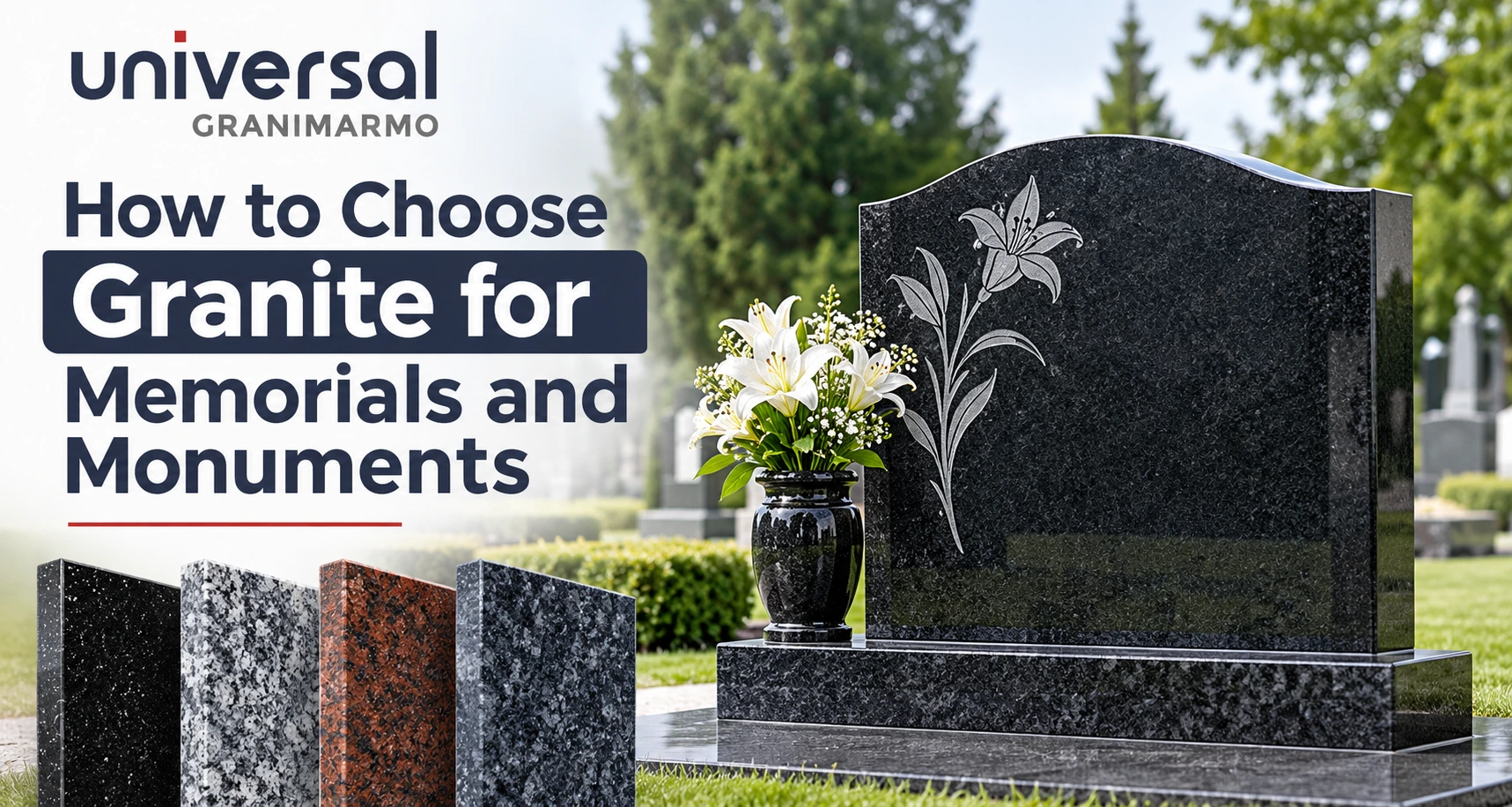
A memorial is one of the few things we build with the intention that it will outlive us. Whether it is a family headstone, a tribute to a public figure or a monument honouring those who served their community, it carries names, dates, and memories that people will return to for decades. Choosing the material is therefore not a decision to rush. The stone must stand in strong sun, heavy rain, dust and changing temperatures while keeping its shape and its inscription clear. It must also feel right to the family or organisation commissioning it. This guide explains how to choose granite for memorials and monuments, from colour and quality to finish, design, installation, and the supplier you trust with the work.
Why Granite Is a Preferred Choice for Memorials
Granite is an igneous rock formed from slowly cooled magma, and it is made mainly of interlocking crystals of quartz, feldspar and other minerals. This structure makes it hard, dense, and highly resistant to weathering. Compared with softer stones such as marble and limestone, granite is much less affected by acidic rain and is less likely to scratch or wear. It can be polished to a deep shine, left with a textured surface, or carved into detailed shapes, which gives designers considerable freedom. It is also available in many natural colours and patterns, so a memorial can be simple and solemn or distinctive and expressive. No stone is completely maintenance-free, but good granite that is properly cut and installed asks for very little care in return for a very long life.
Choose the Right Colour
Colour is usually the first thing people think about, and it affects both the mood of the memorial and how easily it can be read. Black granite is a classic choice because its polished surface creates a strong contrast with engraved lettering and portraits. Grey granite looks calm and traditional, and it tends to hide dust and water marks well. Red and pink granites add warmth, while blue, green, and brown varieties offer a more individual character. Because granite is a natural material, shade and grain can differ from one block to another. Always ask to see a physical sample or recent photographs of the actual slabs or blocks, view them in daylight, and if the monument has several parts, request that they be matched from the same lot. It is also wise to check whether the cemetery, trust or local authority restricts colours or styles.
Check the Quality of the Stone
A beautiful colour means little if the stone is flawed. Inspect the surface for cracks, open veins, pits, patches and uneven colour, and ask whether any filling, resin treatment or dye has been used, since these may age differently from the stone itself when exposed outdoors. For a monument, low water absorption and good strength matter a great deal, particularly in places with heavy monsoons or freezing winters. A reliable supplier should be able to share technical details or test reports for the variety you are considering. Check that edges are clean, faces are flat, and the polish is even across the whole piece. Small natural variations are normal and are part of the charm of granite, but structural cracks are not.
Select a Finish and Design That Will Last
The finish changes how the same stone looks and behaves. A polished finish brings out the richest colour and sheds water and dirt easily. A honed finish gives a smooth, soft, non-reflective appearance. Flamed and bush-hammered finishes create a rough texture that works well for bases, steps and surrounding paving where grip is useful. Many memorials combine two finishes, such as a polished face for the inscription with rough edges for contrast. For lettering, consider sandblasted or deep-cut engraving, and choose a clear typeface in a size that can be read from a comfortable distance. Laser etching can reproduce portraits and fine artwork, especially on dark granite. Before any cutting begins, approve a drawing and proofread every name, date, and line of text, because mistakes in stone are difficult and costly to correct.
Plan the Size, Budget and Installation
The size of a memorial should suit its setting. A headstone must fit the plot and follow the rules of the cemetery, while a public monument should be in proportion to the open space and visible without overwhelming it. The price depends on the granite variety, the size and thickness of the pieces, the complexity of carving, the finish, packing, transport, and installation. Ask for an itemised quotation so that you can compare offers fairly. Pay close attention to the foundation, because even the finest granite can tilt or crack if the ground beneath it settles. Tall or heavy pieces need secure joints and anchoring designed by a qualified person. Allow enough time for quarrying, cutting, engraving and delivery, especially if the monument must be ready for an anniversary or inauguration, or if it is being shipped overseas.
Care for the Memorial
Granite is easy to maintain. Brush away loose dust and leaves, then wash the surface with clean water, a soft cloth or soft brush and, if needed, a mild pH-neutral cleaner. Avoid acids, bleach, wire brushes and high-pressure jets, which can damage the polish, paint in the lettering or the joints. Inspect the memorial once or twice a year for loose pieces, open joints, or movement at the base, and have a professional repair any problem early.
Choose a Trusted Granite Supplier
The supplier matters as much as the stone. Look for experience in monument work, access to consistent raw material, in-house processing, careful quality checks, secure packing, and clear communication. Universal Granimarmo (Universal Granimarmo Private Limited), based in Jaipur and established in June 2013, supplies and exports Indian natural stone, including granite, marble, sandstone, slate and quartzite. Its granite production units, including those at Ajitgarh, Ongole, Jalore and Karimnagar, support buyers in India and abroad. When you contact Universal Granimarmo, share your drawing or reference photograph, dimensions, preferred colour, finish, quantity and delivery location, so the team can advise on suitable options and prepare an accurate quotation.
Final Thoughts
Choosing granite for a memorial or monument is about balancing feeling with practicality. Select a colour that reflects the person or event being remembered, insist on sound stone, choose a finish that keeps the inscription clear, and give proper attention to the foundation and installation. With careful planning and a dependable partner, a granite memorial can remain a dignified place of remembrance for generations. To discuss your project, explore Universal Granimarmo’s website or write to info@ugm.co.in.
Frequently Asked Questions
Is granite a good material for memorials and monuments?
Yes. Granite is hard, dense, and highly weather-resistant, so it suits outdoor memorials that need to last for many years.
Which granite colour is best for a headstone?
Black granite is a popular choice because engraved lettering and portraits stand out clearly on it. Grey, red, and other colours also work well, depending on personal taste and cemetery rules.
Is granite better than marble for outdoor memorials?
For most outdoor settings, yes. Granite resists scratches, acidic rain, and weathering better than marble.
Which finish is best for a granite monument?
A polished finish is well suited to inscriptions and rich colour. Flamed or bush-hammered finishes are better for steps and paving where grip matters.
How do I clean a granite memorial?
Use clean water, a soft cloth or brush and, if needed, a mild pH-neutral cleaner. Avoid acids, bleach, wire brushes and high-pressure jets.
How much does a granite memorial cost?
The cost depends on the granite variety, size, thickness, carving, finish, transport, and installation. Ask for an itemised quotation based on your design.
Can I order a custom granite monument from Universal Granimarmo?
Share your drawing, dimensions, preferred colour, finish, and delivery location with Universal Granimarmo at info@ugm.co.in. The team can confirm the available options and prepare a quotation.