
Granite stone has been one of the most trusted natural stones in construction and interior design for centuries. From ancient monuments to modern homes, granite continues to be a popular choice because of its strength, beauty, and long-lasting nature.
Today, granite is used across residential, commercial, and industrial projects all over the world. Whether it is flooring, kitchen countertops, wall cladding, or outdoor paving, granite offers both functionality and visual appeal.
In this article, we will explore everything about granite stone in a simple and easy way — including its uses, sizes, cost, advantages, disadvantages, and why it remains a top choice in the stone industry.
What is Granite Stone?
Granite is a natural igneous stone formed deep inside the earth from molten magma. Over millions of years, this magma cools and hardens, creating a dense and extremely durable stone.
Granite is mainly composed of:
- Quartz
- Feldspar
- Mica
These minerals give granite its hardness, unique grain patterns, and natural color variations.
Each granite slab is different. This natural uniqueness is one of the reasons why granite is so highly valued.
Where Can We Use Granite Stone?
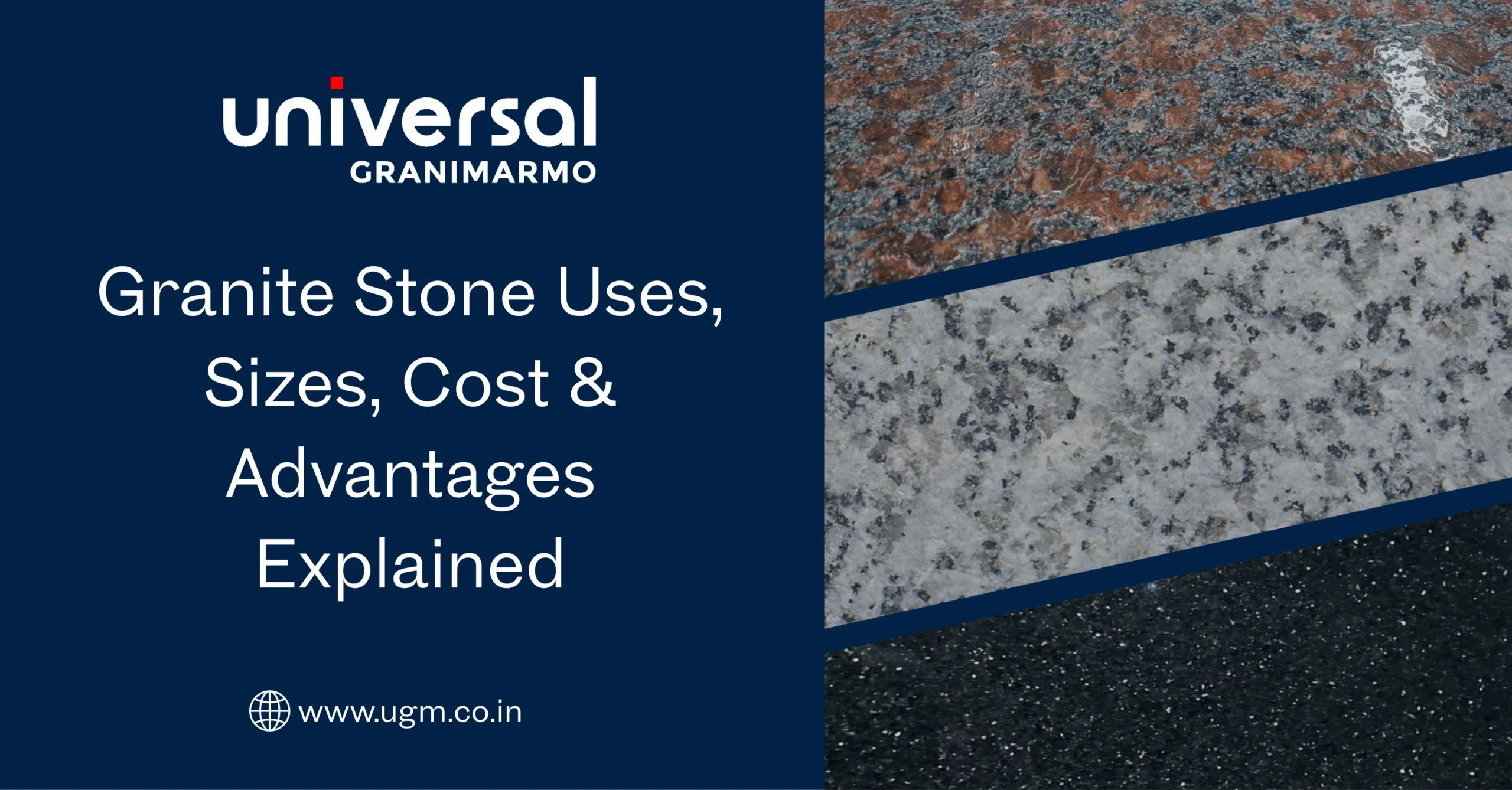
Granite Stone comes in a variety of colours and patterns. The characteristics and performance of granite can vary depending on the colour of the stone. Being natural, granite slabs do not carry uniform patterns or shapes. They are available in a variety of shapes, i.e., square, oval, rectangular, pentagon, and circular. Similarly, there are various colors available in these slabs, like white, black, grey, green, brown, and red.
Where Can We Use Granite Slabs?
Granite stone is incredibly versatile and can be utilized in a variety of applications, each showcasing its durability and aesthetic appeal.
1. In the kitchen, these magnificent stone surfaces serve as stunning countertops that not only elevate the visual charm but also provide a heat-resistant working area for culinary enthusiasts.
2. Bathrooms benefit equally from granite Stone, where they can be employed as elegant vanities or shower walls, bringing an air of luxury while remaining easy to clean and maintain.
3. Beyond interiors, outdoor spaces also find value in granite; patios adorned with polished granite slabs create striking dining areas or fire pit surrounds that withstand weather elements without losing their luster.
4. Additionally, commercial properties utilize granite Stone for flooring and cladding due to their resilience against heavy foot traffic and environmental wear, making them ideal for high-traffic areas like hotels or shopping centers.
5. Moreover, artistic expressions come alive when fabricators transform granite into intricate sculptures or bespoke furniture pieces; thus extending its usage far beyond traditional settings into realms of creativity and design innovation.
What is the Standard Size of a granite slab?
An average granite slab size is about 8′ * 3′ and above. The thickness of granite is usually 16mm to 18 mm, depending upon its length and breadth. Each thickness offers a different look.
When it comes to granite slabs, the standard dimensions play a crucial role in both aesthetic appeal and practical application. Typically, these slabs are available in thicknesses ranging from 15 mm to 18 mm, providing a robust yet manageable weight that suits various architectural and design needs.
The common slab size of 8′ x 3′ serves as a versatile foundation for numerous projects—from kitchen countertops to elegant flooring solutions—while larger formats can be sourced for expansive surfaces or statement pieces in commercial settings.
Known for its durability and timeless beauty, each slab showcases unique veining patterns and color variations intrinsic to this natural stone, making every piece one-of-a-kind while adhering to industry standards that ensure structural integrity.
How Granite Stone is Made?
To create a granite stone slab, the initial stage is to extract it from the earth. Mining companies utilize powerful machines to blast and retrieve the raw granite from quarries. The stone is initially rough and must be sent to workshops for further processing. There, specialized milling machines are employed to cut and polish the granite into a smooth slab. The final product typically ranges from 7 to 9 feet in length and can often be found on display in granite showrooms.
Are Granite Stones Good?
- Granite stone has gained immense popularity in both residential and commercial spaces, primarily due to its exceptional durability and timeless aesthetic appeal.
- Known for being one of the hardest natural stones available, granite slabs are resistant to scratches and heat, making them an ideal choice for kitchen countertops where culinary activities can put surfaces to the test.
- Beyond their practical benefits, these slabs come in a myriad of colors and patterns—each piece uniquely formed by nature—which allows homeowners and designers alike to create stunning visual displays that can enhance any decor style from rustic charm to modern elegance.
- Moreover, when properly sealed, granite slabs resist staining from common household substances like oils or acidic foods, ensuring they maintain their luster over time with minimal upkeep.
- This combination of resilience and beauty makes granite slabs not just a functional surface but also a long-term investment in the overall value of your property.
Pros of Granite Stone:
When considering granite slabs for countertops or surfaces, it’s essential to weigh the pros and cons carefully. On the plus side, granite is renowned for its durability; it can withstand heat, scratches, and general wear and tear far better than many other materials. Its stunning natural patterns provide a timeless elegance that enhances any space, making each slab unique—a true work of art. Additionally, granite is relatively low-maintenance when sealed properly; spills can be wiped away easily without staining.
Cons of Granite Stone:
However, there are drawbacks to consider as well. The price of granite slabs tends to be on the higher end compared to laminate or even some engineered stones. Installation can also be cumbersome due to their weight; professional help is often necessary, which adds to overall costs. Furthermore, while sturdy against most kitchen threats, excessive force could still chip or crack these beautiful surfaces if mishandled. Lastly, sourcing certain colors might involve environmental considerations related to quarrying practices that aren’t always transparent.
Key Properties of Granite Stone
To describe the material more accurately, it is necessary to consider granite characteristics. Let’s highlight them in the table below.
| Hardness: | On the Mohs scale, it’s ranked 6-7 out of 10. |
| Chemical composition: | 70-77% SiO₂, 11-13% Al₂O₃, and additives – potassium oxide, sodium, iron, and magnesium. |
| Porosity: | Low, making the material resistant to weathering and water absorption. |
| Texture: | Visible mineral grains, most often with a coarse-grained or grainy texture. |
The color of granite can vary, as can its application. It all depends on the predominant minerals.
What is the Cost of a granite Stone?
The cost of granite slabs can vary significantly based on several factors, including the origin of the stone, its color and pattern complexity, and the size required for your project. Typically ranging from Rs 60 to Rs 1800 per square foot, granite slabs sourced from high-demand regions like Brazil or India can command a premium price due to their unique aesthetics and durability.
Additionally, rare colors or intricate veining patterns may further inflate costs as they become coveted choices among homeowners and designers alike. Beyond just material expenses, one must also consider fabrication fees, which encompass cutting, polishing, and finishing processes that are essential in transforming raw granite into beautiful granite countertops or flooring solutions.
Installation costs add another layer of financial consideration; skilled labor is often necessary to ensure precise fitting and proper support structures are in place for these heavy materials.