
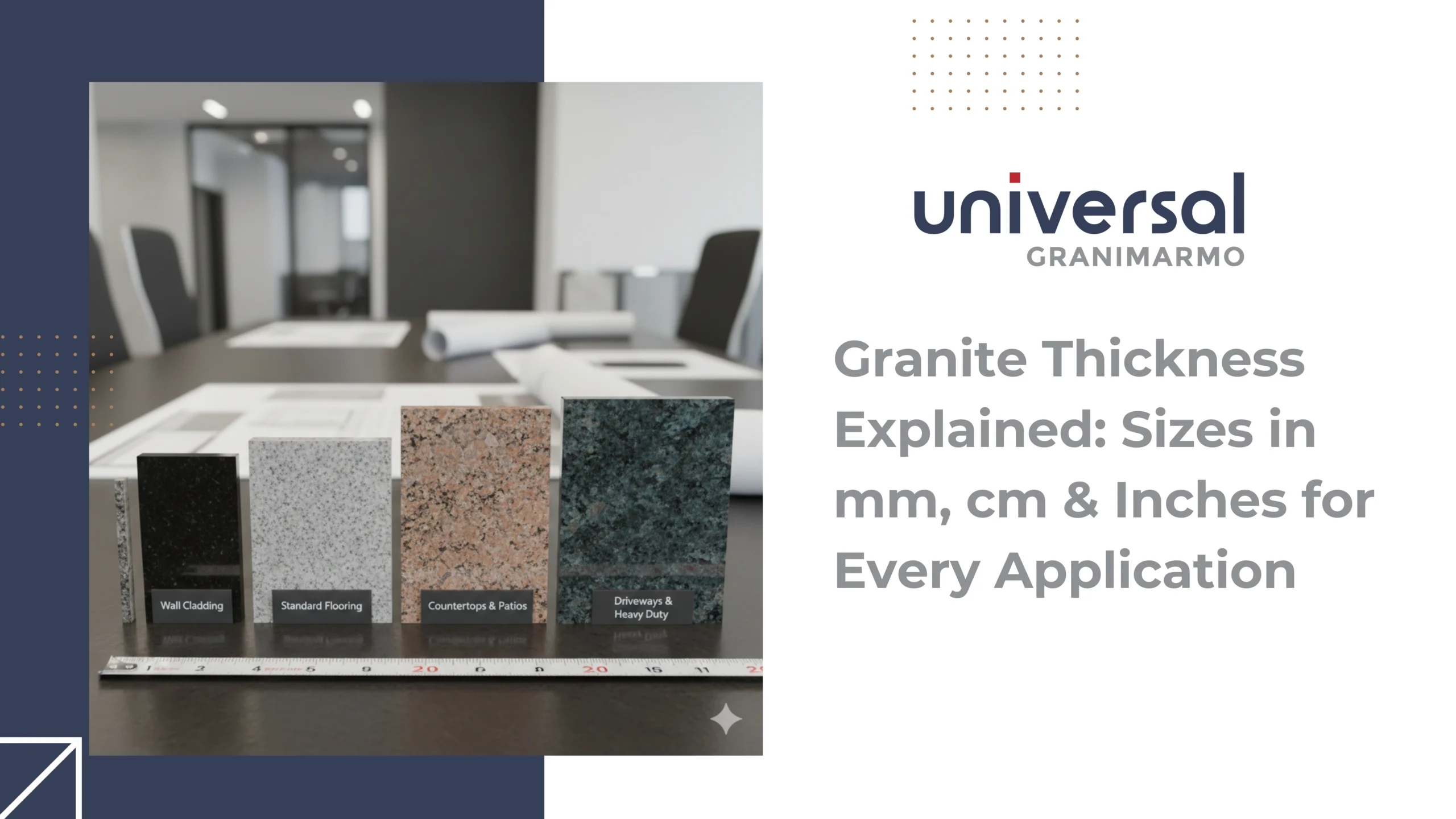
Granite is one of the most popular natural stones in the world. It is strong. It is durable. It looks premium. And it lasts for decades.
But when choosing granite for your project, one question always comes first:
What thickness should I choose?
Granite Tile Size thickness plays a very important role in strength, durability, cost, and application. Whether you are designing a kitchen countertop, flooring, wall cladding, or staircases, selecting the right thickness ensures safety and long life.
In this complete guide, we will explain granite thickness in millimeters (mm), centimeters (cm), and inches, and help you choose the right size for every application.
Granite THICKNESS in TILES
Granite tiles are widely used as a flooring material. The most common size that all homeowners likely prefer and is suggested by stone experts for tiles is 60×30 or 60×60 with a thickness of 2 cm or 3 cm. This size works well for making high-quality flooring. As far as mosaic tiles are concerned, making quality floors, these sizes can do wonders. These include:
- Small – 1-inch mosaic tile with 1/8 inch thickness
- Medium – 6/6-inch and 12/12-inch tiles with 3/8 inch thickness
- Large-format tiles – 18/18-inch and 24/24-inch with up to 1/2 inch thick.
These are the most common and standard sizes available in the open market. B2B and B2C buyers can opt for custom-sized granite tiles as per their commercial and domestic purposes.
The segment of 2-3 cm varies between 1 1/8”-1 5/16” and 2 cm (3/4 inch).
Buying Guide: Choosing the Right Granite Thickness
If you’re unsure what thickness of granite you need, here are some quick guidelines based on the intended use:
Lightweight Wall Applications:
If you’re installing granite on a vertical surface (interior wall, backsplash, etc.) where weight is a concern, go with thin slabs around 10–16 mm. These will be easier to mount and plenty sufficient when adhered to a substrate. Thinner granite is intended for decorative use – it wouldn’t support weight on its own, but on a wall, that’s not an issue.
Moderate-Traffic Flooring or Indoor Stairs:
For a typical home floor or a low-rise indoor staircase, a thickness in the range of 18 mm to 20 mm (≈3/4″) is a good choice. Around 2 cm provides durability for moderate foot traffic without being needlessly thick. This is the same range that many standard granite tiles come in. Ensure a proper subfloor/substrate for support.
Kitchen Countertops or Outdoor Steps:
Use at least 20 mm (2 cm) granite, and preferably 30 mm (3 cm) for these applications. Countertops benefit from the rigidity and strength of 3 cm, especially for heavy-use kitchens. Outdoor steps in 3 cm granite will endure weather and usage better than thinner stone. If you do use 2 cm for a counter, plan to reinforce it. In summary, 3 cm is the sweet spot for most countertop and step projects.
Heavy-Duty or Custom Builds:
Considering a massive island countertop, large exterior slab installation, or other heavy-duty use? Opt for 4 cm thick granite or above. Thicknesses of 4+ cm are custom options that give a truly substantial look and exceptional strength. They are ideal for making a bold statement (for instance, a luxury kitchen with a 4 cm thick granite island, or a public stairway with extra-thick treads). Just remember the practical downsides: higher cost and much heavier pieces to maneuver during installation.
Every project is unique – if in doubt, consult with a stone supplier or structural expert. They can recommend a thickness after considering the span, supports, and loads involved.
Granite thickness impacts not just how your space looks, but also how it performs over time. The longevity and stability of a granite installation – be it a sleek countertop or a multi-storey building facade – depend heavily on choosing a slab of the right thickness. By considering the guidelines above for each application, you can ensure your granite surfaces remain beautiful and structurally sound for decades.
Final Thoughts
Granite thickness plays a critical role in the success of any construction or interior design project. Thin granite is ideal for decorative and vertical applications, while thicker granite is essential for countertops, flooring, and heavy-duty use. The right thickness improves safety, enhances durability, and ensures long-term value. Whether you are planning a residential renovation or a commercial development, understanding granite thickness in mm, cm, and inches helps you make an informed decision. Choosing wisely today will guarantee strength, beauty, and performance for decades to come.